














 the kitchen (cooking) range
the copper water heater/ boiler
the geyser water heater
everyday washing facilities
guest
the kitchen (cooking) range
the copper water heater/ boiler
the geyser water heater
everyday washing facilities
guestwashing facilities care of
teeth shaving equipment bathing facilities gas lighting
in houses gas street lighting the lamplighter


Gas lighting in the streets early-to-mid 20th century
By the webmaster’s mother, 1906-2002
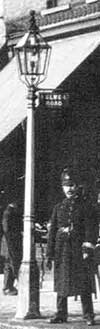
A gas street lamp, a detail from a larger photos from the early 1900s.
Children used the lamp posts as winning posts in outdoor street games.
When I was a child in the early 1900s, the street lights ran on gas and were lit by teams of lamplighters.
How gas street lights worked
The street gas lights worked the same way as the house gas lights in that the flame from the lighted gas heated up mantles which became incandescent and gave out light.
Street lights gave out more light than house lights because there were more gas jets to a lamp, each with its own mantle. When the mantles needed replacing, which was more often than they were actually replaced, the light flickered so that shadows seemed to move.
The light from the street lamps
The light from the gas street lamps was greenish, eerie and flickering. Both my father and I on separate occasions thought we saw a woman ghost in our front bedroom, but I didn't want to think of such things and put it down to the eeriness of the flickering shadows.
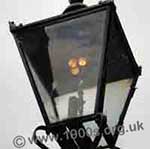
Three lighted mantles in a gas street lamp. Photographed in Blists Victorian Town
Guest contribution
Gas street lamps gave out a circle of light which didn't spread far. In between the lamp posts was dark.
Peter Johnson
Clockwork timers for gas street lamps
Guest contribution
Shortly after the Second World War clockwork timers started being installed in street lamps. Then the light came on automatically every evening and went off automatically every morning - which meant the end of the lamplighter. Nevertheless, every so often a man with a ladder would still visit each lamp to wind up the clockwork mechanism.
Also every so often during the day a man came round with a ladder to service the lamps or to repair the panes of glass that often got broken. Council men would also come round to paint the lamp posts which were made of cast iron.
Peter Johnson
Street lighting from shop lamps and pub lamps
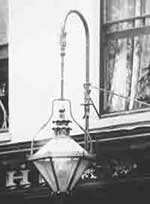
Privately owned lamp outside a shop. Detail from a photograph in Farnham Museum.
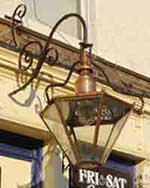
Typical lamp outside a public house. Photo courtesy of Cliff Raven.
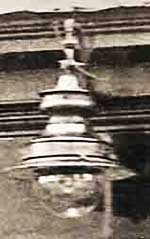
Lamp outside a terraced house used as a draper/haberdashery shop.
If you can add anything to this page or provide a photo, I would be pleased if you would contact me.
Page based on the recollections and notes of the webmaster's mother (1906-2002) with additional research and editorial work by the webmaster
Text and images are copyright

