













 formality
men's trouser braces and flies
women's corsets
nylon stockings
button
formality
men's trouser braces and flies
women's corsets
nylon stockings
buttonhooks enemas more recollections


Button hooks: vintage and antique
Why button hooks used to be essential
Years ago, there were no zip fasteners; buckles were not feasible on a small scale and laces tended to tear delicate clothes. So tiny buttons were essential as a way of doing up shoes and clothes attractively. However, tiny buttons for tiny button holes were too fiddly for fingers to manage. Button hooks to the rescue!
What button hooks were
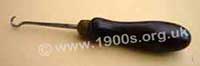
Simple button hook from my mother's effects.
Basically a button hook was - and is - simply a hook on a handle, the hook being small enough to go through a small button hole. The pictures show examples.
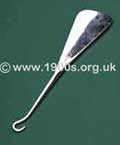
This button hook from my mother's effects incorporates a shoe horn.
Every household had one or more button hooks.
How to use a button hook
To do up a button with a button hook, the button hook was poked through the button hole and twisted round the button. Then it was brought back through the button hole with a twisting motion, which brought the button with it.
Button hooks were only needed for doing buttons up. Undoing them was easier and, even as a young child, I could do it.
Button hooks for children's button-up shoes
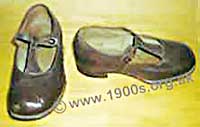
Button-up strap shoes.
Button-up shoes were not really practical because they could only fit well on one particular width of foot. This put pressure on the button which worked loose and eventually came off. It then had to be sewn back on again. A thimble and a strong needle were essential for getting through the leather.
As a young child growing up in the early 1940s, my shoes all did up with buttons which had to go through button-holes in leather straps, as shown in the picture. It was just possible to do these buttons up with the fingers, but it was hard on the hands. With a button hook it was easy.
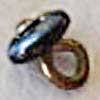
Shoe button. Note its large rounded metal shank.
Shoe buttons were not regular buttons sewn directly onto the leather. The picture shows how they had a metal 'shank' for the button hook to grip and it was this shank that was sewn onto the leather. The shank was big enough to slip through the leather without prising the button off.
I was very relieved to see the end of button-up shoes and button hooks. This happened for me when buckles replaced the shoe buttons. There were a number of holes in the strap which allowed the buckle to be done up in several positions, for a better fit. I suppose I must have been about 10 years old when I had my first pair of buckle-up sandals. I can't remember my first pair of lace-up shoes.
Button hooks for clothes of delicate fabric
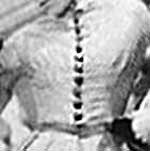
The photo shows a dress of delicate fabric done up with small buttons. (If you have a better picture, please contact me.) Such buttons could not be done up without a button hook.
Button hooks as attractive accessories
Clothes with tiny flimsy buttons were not everyday wear. They were for going out and special occasions. For these, attractive button hooks were the accepted accessory.
As a child in the 1940s, I only saw button hooks used for children's shoes, but the profusion of really elegant button hooks still in family collections show that they certainly did serve as ladies' accessories. A few samples were probably kept on display on dressing tables along with hand mirrors and hair brushes.
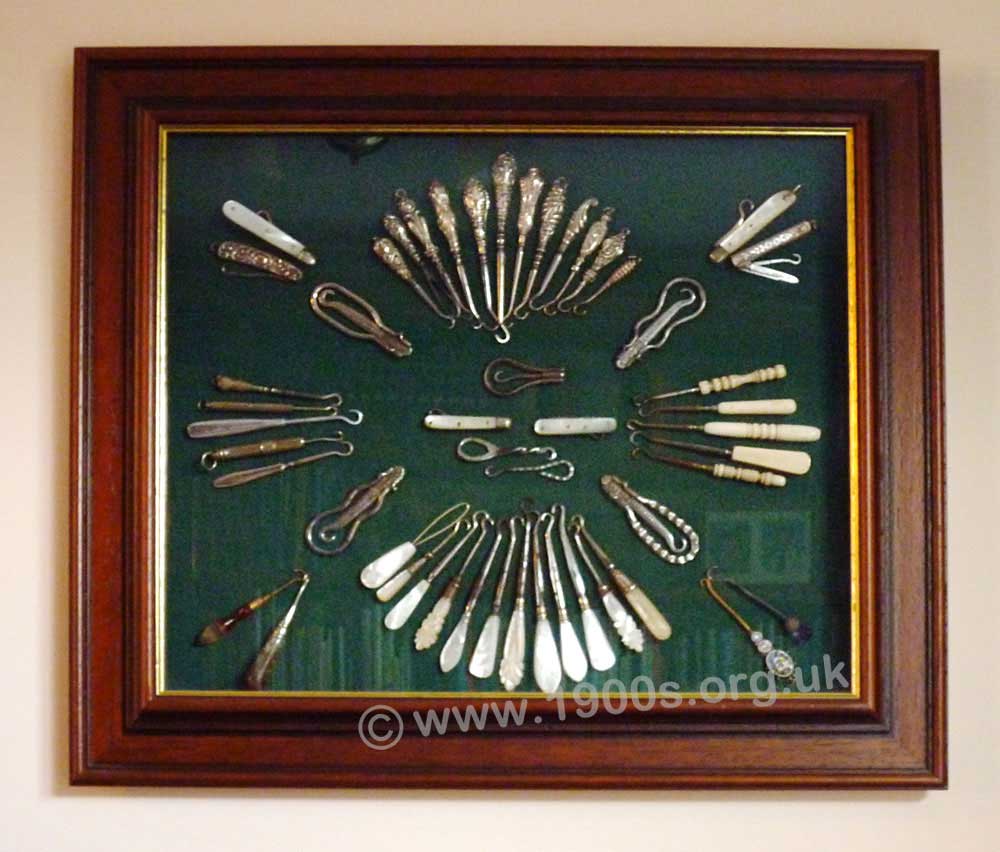
Wide range of button hooks in use up to the mid 20th century, from the everyday type with metal or wood handles to the elegant accessories with handles made of mother of pearl, embossed silver, tortoiseshell and carved ivory, etc. There are also folding button hooks. Photo courtesy of Anne Davey.
Click for a larger image

