














 older
olderrural housing open-fires
for
cooking oil-lamps
for
lighting the
outdoor
privy chamber pots and commodes mice
in houses recycling
and rubbish disposal student accommodation
1950s


Recycling in the early 20th century
Did householders really 'carry' their dustbins out for collection?
My mother's childhood recollections of waste disposal and refuse collection mention that people 'carried' their dustbins out to the pavement for the dustman to collect.
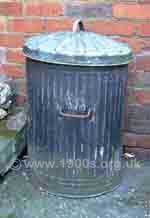
This struck me as strange because dustbins are usually rather heavy: During the 1940s and 1950s when I was growing up, dustmen came into side alleys and back gardens to collect dustbins, and householders did not have to carry them out. Even today, when householders do have to take their bins out to pavements for collection, the bins are wheelie bins which have wheels.
Why were dustbins light enough for householders to carry out for collection?
I realised that society in the early years of the 20th Century actually had very little to dispose of, and was in fact highly commendable in terms of its recycling. Here is why:
-
Most significantly, there were no bulky 'luxury' items to throw away: no televisions, no fridges, freezers, dishwashers, washing machines or tumble driers. Accordingly there was none of the bulky packaging that accompanies such items when they are delivered new.
-
Also significantly, there was no plastic. Food bought in shops was weighed out at the point of purchase and put into paper bags for women to carry home in their 'bag-for-life-style' wickerwork baskets. The paper bags were either put onto the coal fired range which was burning throughout the year apart from in heat waves, or put out in the back garden for a weekly bonfire.
-
When things broke, normal practice was to mend them rather than throw them away. Travelling tinkers would repair leaking pots and pans and even staple together pieces of broken china. Knife grinders kept knives sharp and other metal utensils were made to last as long as possible.
-
Newspapers, once read were put to use. They were cut into squares and hung in the lavatory as toilet paper; they were used to light that ever-burning coal fire as well as the weekly garden bonfires; they were used to wrap up left-over food scraps for disposal; and - if there were still any spare - they were sold as wrapping to fish and chip shops.
-
It was considered entirely acceptable for clothes that one set of children had outgrown to be passed on to younger children.
-
Clothes were mended when they became thin or torn and when they could be mended no longer, the bests parts were cut out and used to make clothes for smaller children.
-
Whatever was left could normally be given or even sold to the rag and bone man who toured the streets regularly.
-
Food was fresh. Although tinned foods were apparently around, there is no mention in my mother's extensive recollections of them ever being used in working class families. So there were no tins to dispose of.
Did ashes from the coal fires make dustbins heavy or were they 'recycled'?
To answer the question of whether ashes were put into dustbins, ompare the following ways of dealing with ashes, firstly in the 1940s and then later in the century.
Guest contributions
Disposal of ashes in the 1940s
In my family in the 1940s the coal ash and wood ash never went into the dustbin. We saved it and spread it on the garden. This was thought to improve the heavy London clay while also keeping the slugs at bay. We also took sacks of ash to our allotment to be dug into the soil, and this was common practice. Even soot from the chimney was saved for a year so that it lost its sulphur content and could be used for spreading around plants. People had done this for generations. Families who were not interested in gardening would knock on our door or come to the allotment to buy fruit and vegetables, or eggs from our hens in the back garden.
Peter Johnson
Disposal of ashes 1950s-60s
In the 1950s and 60s we used to have two dustbins - one for normal rubbish (not much in that) and the other for the ashes. That one was nearly full and was pretty heavy, but its contents were used for the garden.
Jill Seal
One key to the difference between these two statements is the date. The mid 1950s saw the end of the rationing and shortages due to the Second World War. People didn't have to find a use for everything the way they had done in the past. The other key could be the affluence of the household, and their interest in gardening.
Of course there must have been a few families who wrapped their ash in newspaper and disposed of it in the dustbin for the dustman to collect, but this was by no means the norm.
More ways that minimised rubbish
- Milk was delivered from churns into householder's own jugs. So there were
no milk
bottles or milk cartons to dispose of.
- Fruit and vegetable peelings and waste went onto garden compost heaps.
- Other food scraps were either given to chickens and rabbits which were eventually slaughtered for their meat, or to pets.
- Whenever there was no life at all left in anything, it was saved for the rag and bone man. He didn't pay much but it was better than nothing. He travelled the streets to collect unwanted items, including worn-out clothes. Rag and bone men had their own markets for these: Rags were used in paper-making and metals found their ways back to whatever smelting works dealt with the metal concerned.
- Personal waste products from nightly use of chamber pots and visits to outside lavatories were also put to use on compost heaps.
So what went in dustbins for refuse collection was minimal; and very little went into landfill. If a large item had to be disposed of there was always the rag and bone man and dustmen would always take things for tip of a few coppers. This was a source of income for them because they invariably knew how to dispose of most things profitably. In my own lifetime, when black plastic rubbish bags came in, there was industrial action by dustmen who considered that they were losing a source of income by not being able to pick over the refuse. I think they got a salary rise.
In summary, most waste for collection in the first part of the 20th Century must have been made up of only miscellaneous incidentals. No wonder householders could carry their dustbins out to the pavement for collection.
If you can add anything to this page or provide a photo, I would be pleased if you would contact me.
Text and images are copyright

